Plugging XT60 equipment into a Bluetti station
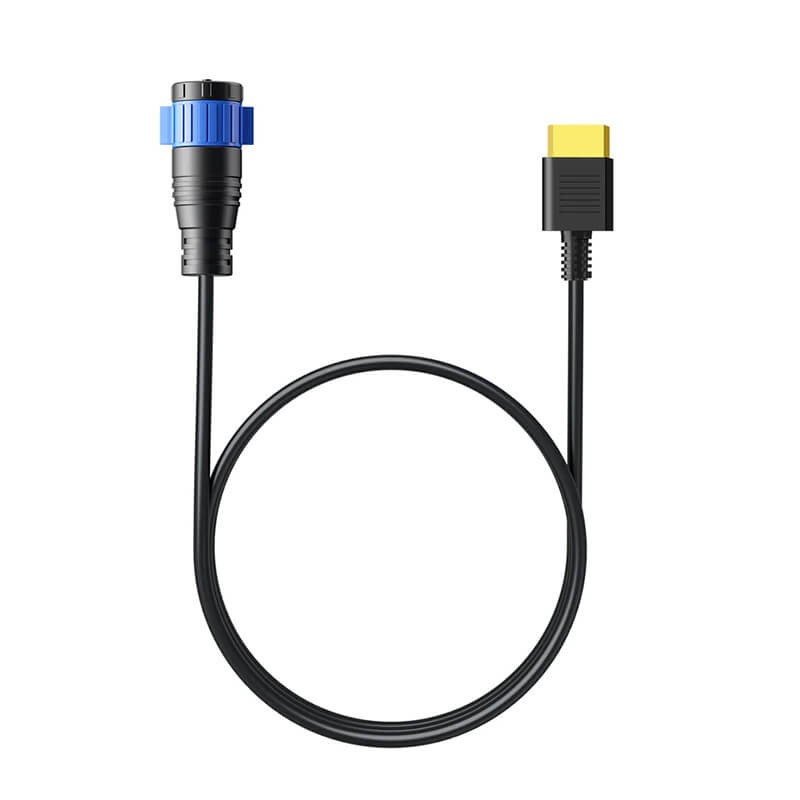
Picture a piece of equipment ending in an XT60 plug and a station whose port is P120D type: the two simply do not mate. This Bluetti cable is built to close that gap, with one end from each family. The information available gives neither voltage, current nor length; it only confirms the brand. It is therefore up to the user to make sure, manual in hand, that the equipment and the station are meant to work together.
Use scenarios
For personal use
A hobbyist preparing a backup supply for a garden shed, a boat or a caravan can use it to link components without soldering or an improvised connector. That keeps the installation tidy and easy to dismantle.
For professional use
An installer, an electronics technician or an event organiser will keep one in the accessory case to test a device on a station before it is integrated for good. Both plugs come apart without tools, which makes repeated trials easier.
What is known about its construction
It is a cable fitted with two plugs from different families. No data covers conductor cross-section, sheath material or any protection against moisture, so it is best reserved for dry, sheltered locations.
Connection steps
- Switch off the station and the equipment to be connected.
- Insert the P120D plug into the matching port, respecting any keying.
- Insert the XT60 plug into the equipment, without force.
- Switch on again following each manufacturer’s instructions.
Connecting to a household network or a permanent installation is a task for a qualified installer; this cable is no substitute for assessing the installation.
Strengths
- Bridges two plug formats commonly met around batteries and power stations.
- Made by Bluetti, the brand of the station concerned.
- Ready to use: nothing to adjust.
Technical details
- Brand: Bluetti
- Ends: P120D and XT60
- Voltage, current, length: not specified
Thinking about the route
Plan the path of the cable before connecting anything. Keep the run as direct as the layout allows, avoid crossing mains leads, and leave a gentle curve at each plug instead of a tight bend. A neat route reduces strain on the contacts and makes it obvious at a glance which device is linked to which.
Safety
Before plugging in, compare the station’s limits with those of the connected equipment and always keep to the lower one. Do not leave the cable touching a hot surface, hang no load from it and do not put it under tension. A cable with a damaged sheath, or whose plug warms up unusually, should be taken out of service.
Care and storage
A dry cloth is enough to remove dust from the plugs. Once cool, coil it without excess tension and keep it somewhere dry. If you carry it in a vehicle, secure it so that it does not rub against metal parts or take repeated knocks on the road.