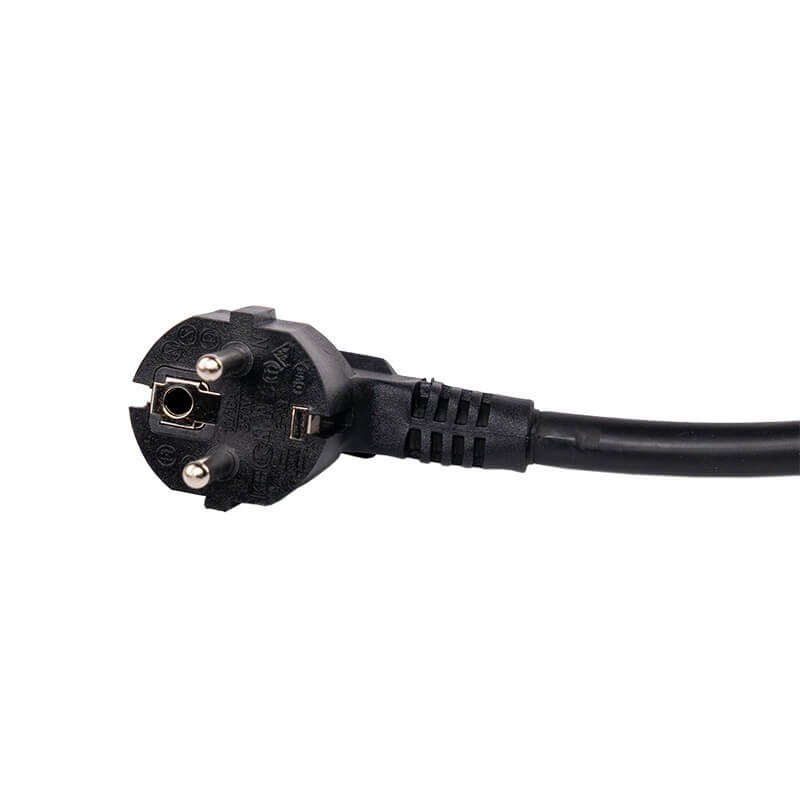
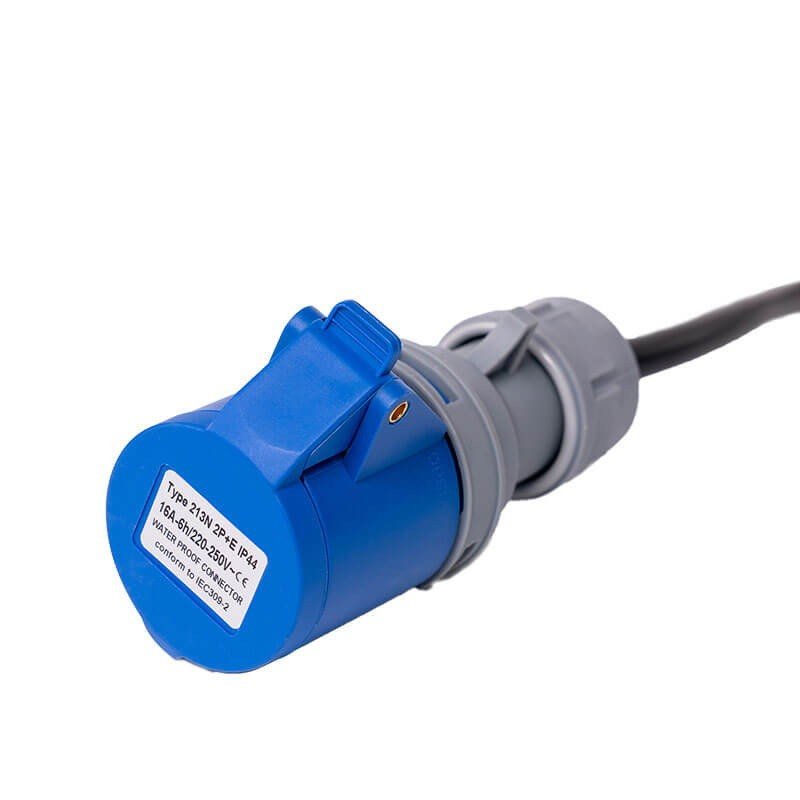
One lead for two socket families
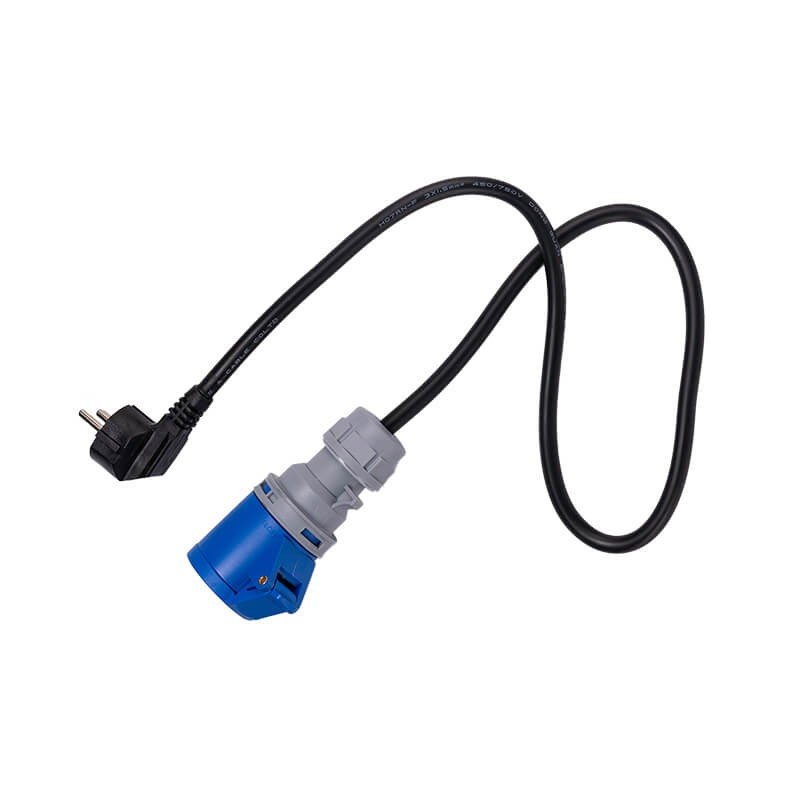
In a house, the most common wall outlet is the Schuko type. On a building site, at a campsite or aboard certain mobile equipment, you instead meet standardised CEE-type connections, sturdier and often colour-coded. This one-metre lead joins the two worlds: one end plugs into a household socket, the other receives or presents a CEE connection.
Who needs it
A home user will take it out to feed or recharge a power station, a small compressor or a charger from a garage socket. A tradesperson will use it to plug a site tool into a house outlet while waiting for the permanent installation, or to test a machine in the workshop. A motorhome pitch operator will see it as a handy repair item.
A few scenarios
- Linking a charging point or a station to a garage socket.
- Plugging a CEE-fitted tool into a household extension lead.
- Testing a machine before its final connection.
What is known about the product
The listing keeps a single value: the length, 1 m. Nothing indicates conductor cross-section, maximum current, voltage or supported power. No material and no protection rating either. Treat this information as a frame, and always refer to the rating plates of the two devices being connected.
Why 1 m is useful
One metre is a simple compromise: long enough that the appliance does not have to sit against the wall, short enough not to leave a surplus of cable lying around. It fits easily into a toolbox or a vehicle boot and stays out of the way.
Precautions when plugging in
First compare the power of the CEE device with what the household socket and its circuit can deliver: these two worlds are not always sized the same way. Do not use the adapter as a way to get around a protection limit. Connect while everything is off, unroll the cable fully if it is coiled, and avoid placing it under furniture or a rug. Any modification to a fixed installation belongs to a qualified installer.
Technical specifications
- Length: 1 m
- Type: adapter cable, Schuko to CEE
- Other data (voltage, current, cross-section): not provided, read the manual
Safety
Never use an adapter whose sheath is cut, crushed or browned. Avoid daisy-chained extension leads and do not plug this lead into an overloaded power strip. For outdoor use, keep the connections out of the water and away from puddles; since no sealing rating is given, do not assume they withstand rain. If in doubt, unplug and have it checked.
Care and storage
Unplug by gripping the plugs, never the cable. Dust the contacts with a dry cloth and check for signs of overheating. Store the lead in a loose loop, away from moisture and direct sunlight, with nothing resting on it.