
Routing a thin cable without harming the panel
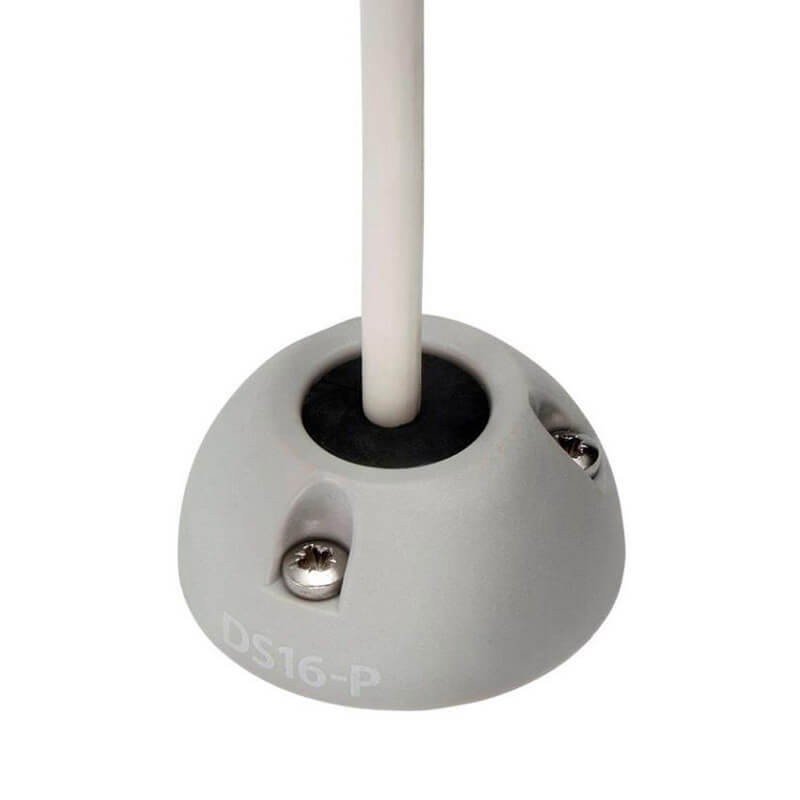
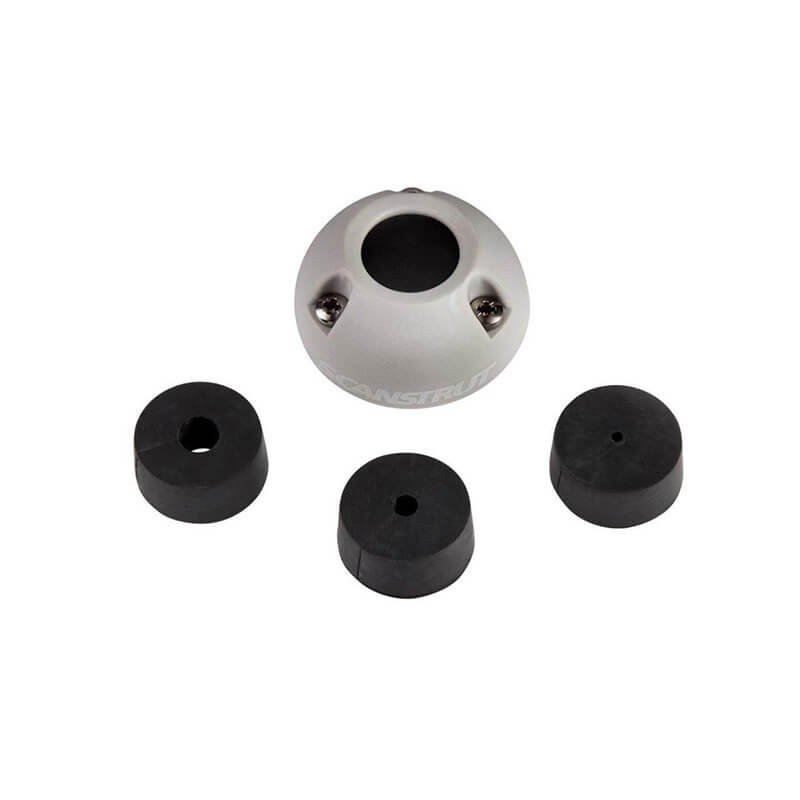
A cable that passes through a bulkhead, a boat deck or a roof rubs against the edge of the hole, lets water in and gradually wears out. This Scanstrut cable gland is there to guide the conductor through the opening and give it a clean passage. It is meant for cables with a diameter between 2 and 8 mm, such as those of a sensor, an aerial, a probe or a small power lead.
How it is used
You drill a hole at 39 mm in diameter, place the part, thread the cable through the opening, then adjust everything so the conductor is neither stretched nor pinched. Because the manufacturer gives no fixing method or sealing figure here, follow its instructions for fitting and for choosing a suitable sealant for your surface, if one is needed.
Uses for private and professional users
On a sailing or motor boat, this kind of accessory connects an instrument from outside to the cabin. In a motorhome or converted van, it lets you bring out the lead of a small solar module or an aerial. An installer can use it for thin links entering an enclosure or a service duct.
Construction
The stated material is plastic. It is light, does not rust and is easy to work around during fitting. The 39 mm figure is the diameter to plan for the opening; other dimensions are not given.
Key points
- Brand: Scanstrut
- Diameter: Ø39 mm
- Cables covered: 2 to 8 mm
- Material: plastic
- Manufacturer warranty: 2 years
Careful installation
Before drilling, check what lies behind the panel: pipes, wires, reinforcements. Measure your cable at its thickest point, connector included, since it must either pass through or be connected afterwards. When a cable leads to a household network, the work belongs to a qualified installer.
Safety
A live cable rubbing on a sharp edge can be damaged. Make sure the edge is clean, the cable is not bent sharply and no strain acts on its sheath. If your cable falls outside the 2 to 8 mm range, choose another part rather than forcing it.
Choosing well before you buy
The 39 mm diameter concerns the hole to cut; the 2 to 8 mm range concerns the cable. Check both values before buying a drill bit or a hole saw. Also think about the thickness of the panel, which the listing does not mention: a thin bulkhead, a laminate deck and an insulated roof are not worked in the same way. If you are unsure about the watertightness needed at the crossing point, ask a marine or building professional for advice.
Care
Once a season, look at the condition of the part, clean it with a soft cloth and clear water, and check that no play has appeared around the cable. If the plastic cracks, replace it.