
Where the outdoors meets the technical room
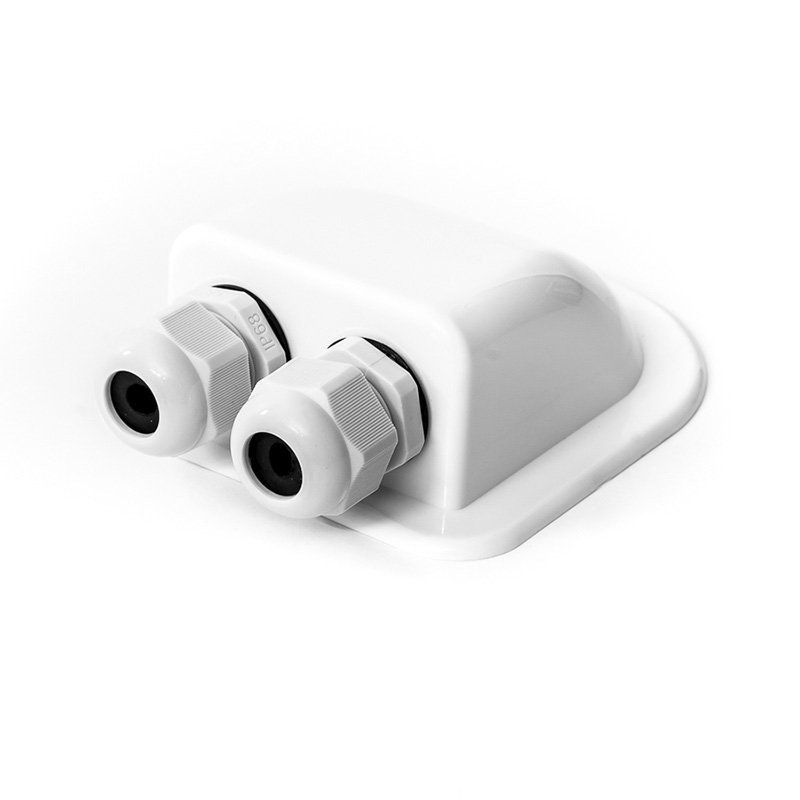
In a photovoltaic installation, the trickiest part is not always mounting the panels but bringing the cables into the building without weakening the envelope. For this, Wattstunde offers a two-entry housing in white ABS. It lets you guide two conductors together through the same opening, instead of making two separate holes.
How to think of it
Picture it as a small transit station: cables coming from the modules arrive on one side and leave towards the inverter or charge controller on the other. The available listing provides no cable diameter, sealing information or fixing system. The manufacturer’s instructions are therefore the source to follow on these points.
Who uses it
The owner who sets up a small garden-roof or garage installation personally finds a simple component here. The professional installer, for his part, appreciates standardising the crossing type from one job to the next, with a light part he can carry in numbers in his vehicle.
Material, colour and footprint
The part is made of white ABS plastic. It measures 13 x 9.5 x 4 cm. This footprint, clearly wider than a simple gland, must be taken into account when choosing the position: check that a sufficiently flat surface exists at the planned spot, away from roof edges and valleys.
Summary sheet
- Manufacturer: Wattstunde
- Type: two-entry lead-through housing for solar installations
- Material: plastic (ABS)
- Dimensions: 13 x 9.5 x 4 cm
- Colour: white
- Manufacturer warranty: 2 years
Sequence of work
Begin by measuring the real cross-section of your conductors where they are thickest, for example at the plugs. Then choose the crossing point according to the structure of the covering and the route to the device. After drilling, offer up the housing, thread the cables and fix everything following the instructions. Finish with a visual check, then a second one a few weeks later.
Why group two cables
Every hole in a roof covering is a point to watch for years. By bringing both links into one housing, you reduce the number of places to check and make the route clearer for whoever works on it later. Simply note which cable enters by which opening, so that polarities are not swapped during a later job.
Caution
Work at height requires fall protection. Module cables remain live as soon as light falls on them: treat them as always energised. Connection to the dwelling’s circuits is reserved for a qualified person.
Monitoring and cleaning
An inspection in spring and another in autumn are generally enough to spot play, a crack or a trace of damp. Clean the housing with water and a soft cloth, without abrasive product, and replace it at the slightest doubt about its integrity.