
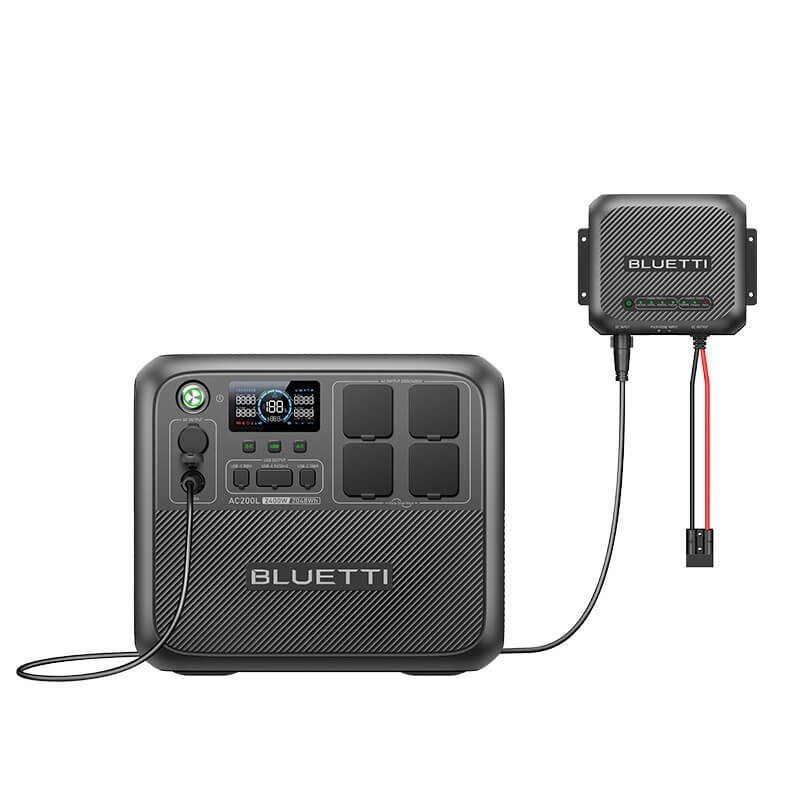
A DC-DC charger to feed a battery from several sources
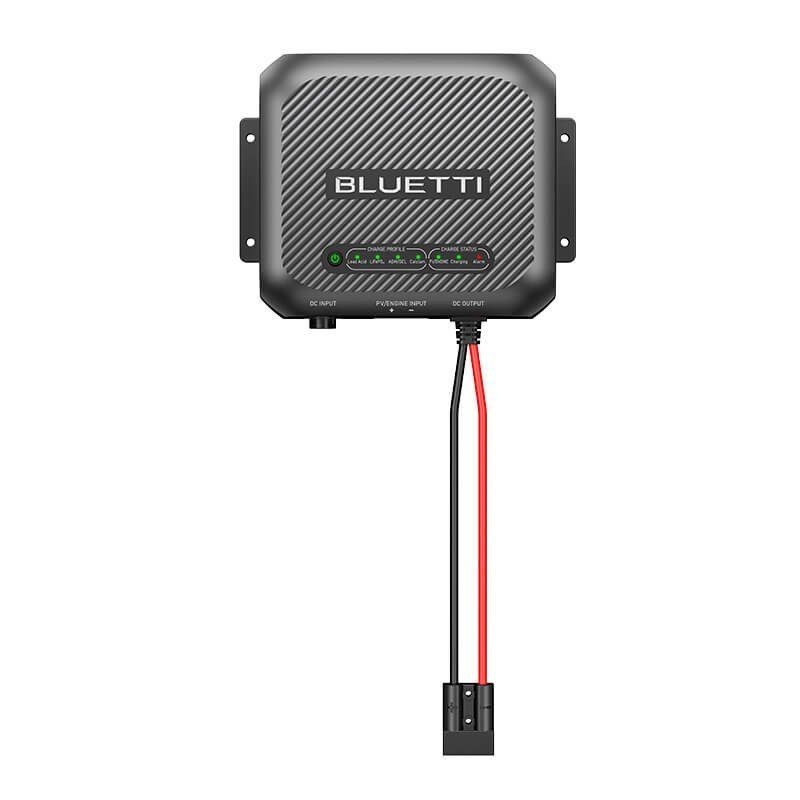
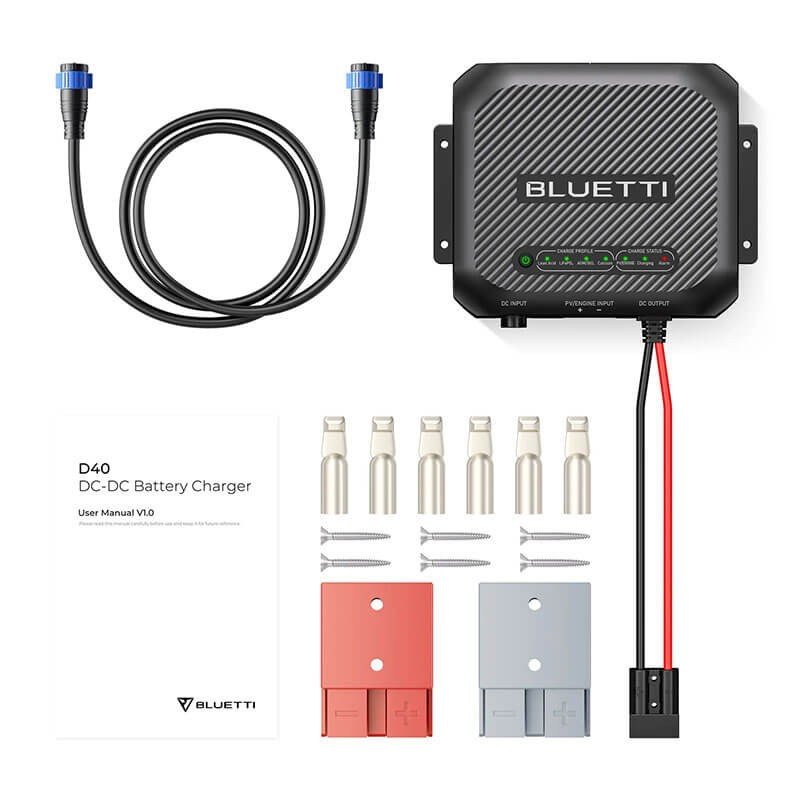
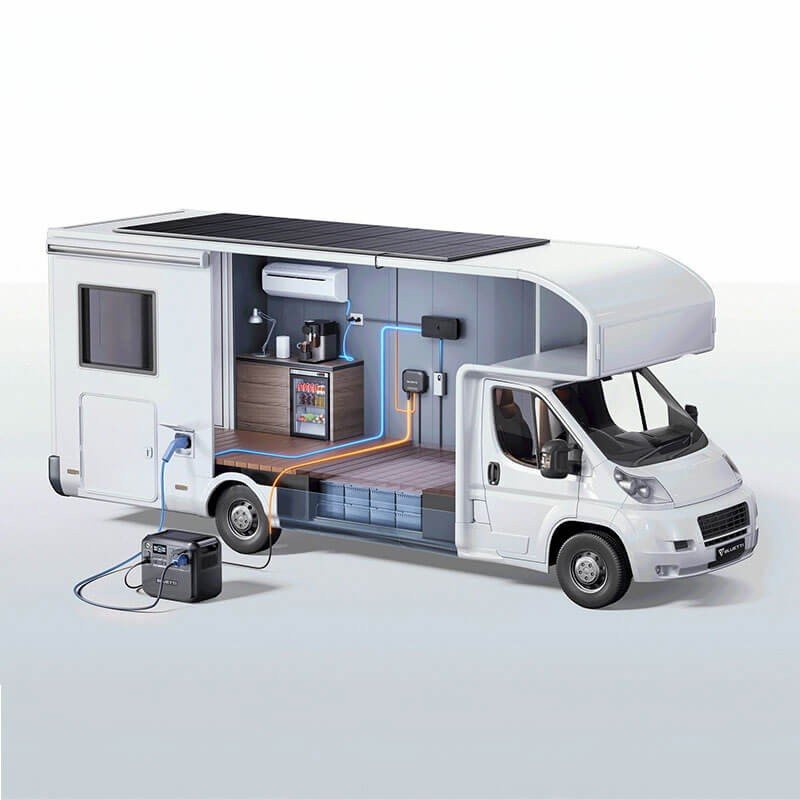
The Bluetti D40 is a DC-DC battery charger built for a 12 V system. It sits between a direct-current source and the battery to be recharged, and adapts the current so charging stays within the stated limits. In a motorhome, boat or converted van, it is the link that lets you fill a service battery without drawing on mains power.
Applications
For private users
A van traveller can connect the D40 to one or more solar panels and let the battery recharge during stops. The photovoltaic input accepts 12 V to 36 V DC, with 20 A at most, or about 400 W according to the data sheet. The rated charge current goes up to 30 A, limited to 20 A at most when paired with the AC200P L station, according to the manufacturer.
For professionals
A vehicle fitter or an installer of off-grid lighting gets a compact module to integrate into a technical cabinet, with a footprint limited to 232.7 × 180.7 × 69.2 mm. Remote sites, measuring stations and shelters without a grid connection benefit from continuous recharging during the day.
Strengths drawn from the data sheet
- Support for 12 V systems
- Wide solar input range, 12 V to 36 V DC
- Rated charge current up to 30 A
- Weight of 2 kg, no bulky unit to house
Technical specifications
- Type: DC-DC battery charger
- Battery voltage: 12 V system
- Rated charge current: max. 30 A (max. 20 A via the AC200P L)
- Nominal PV power at 12 V: 12 V to 36 V DC, 20 A max. (+/- 400 W)
- Max. PV open-circuit voltage: 12 V to 36 V DC, 20 A max.
- Ingress protection: IP20
- Dimensions: 232.7 × 180.7 × 69.2 mm
- Weight: 2 kg
Installation and wiring
Choose a dry, ventilated, easily reached spot, because an IP20 rating gives no protection against water splashes or prolonged damp. Cables must have a cross-section suited to the expected current, and each line should be protected as the manual recommends. Wiring to a fixed installation, a vehicle or a string of panels demands care: if in doubt, have a qualified installer do it and check battery compatibility with the manufacturer.
Safety
Do not exceed the input and output values on the data sheet. Disconnect the sources before working on the terminals and respect polarity. Leave space around the housing to shed heat and do not cover it. Do not use the unit if it shows signs of impact or corrosion.
Care and storage
Inspect the connections now and then: a loose clamp or an oxidised terminal heats the whole assembly. Dust the housing with a dry cloth. If it will sit idle for long, disconnect it and keep it dry, away from sudden temperature swings.