Why add a residual current device?
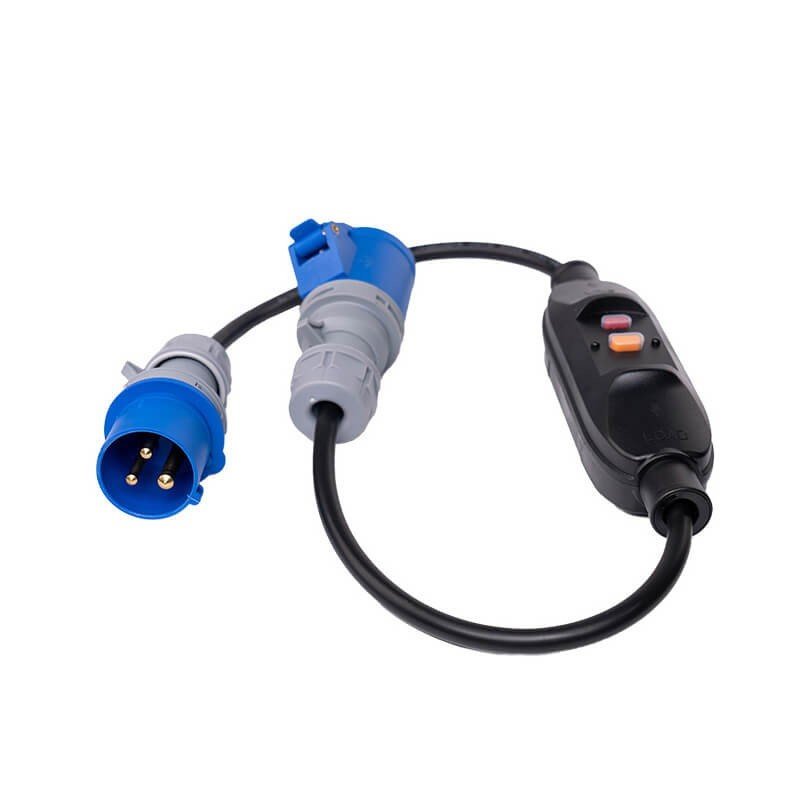
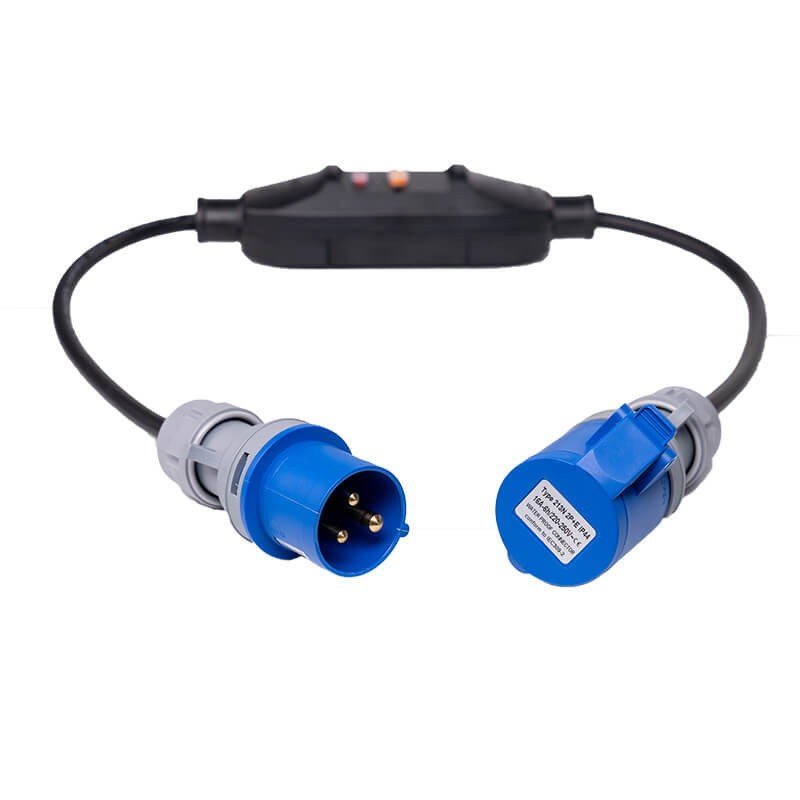
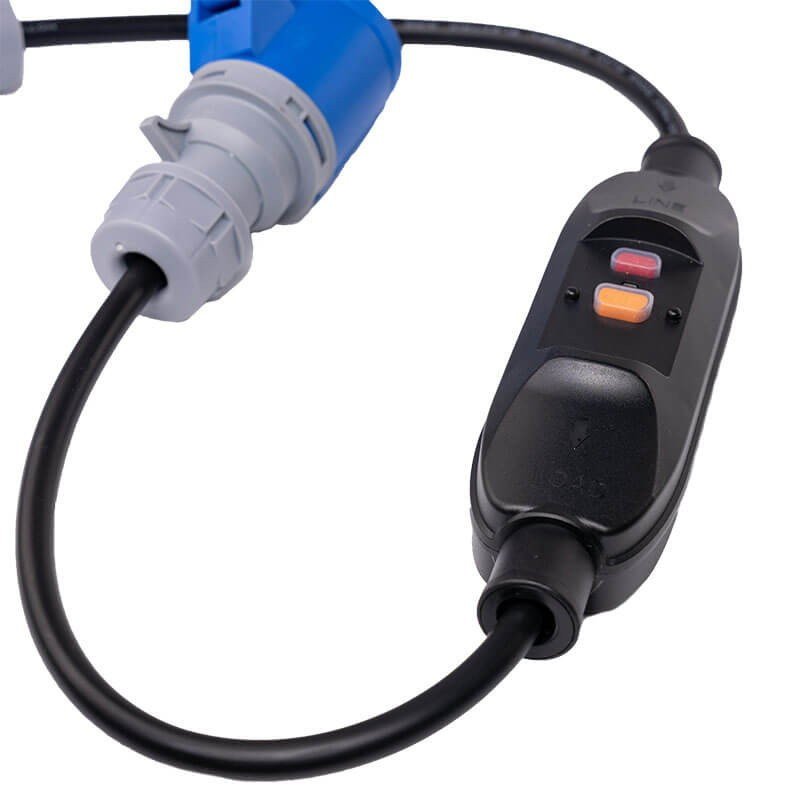
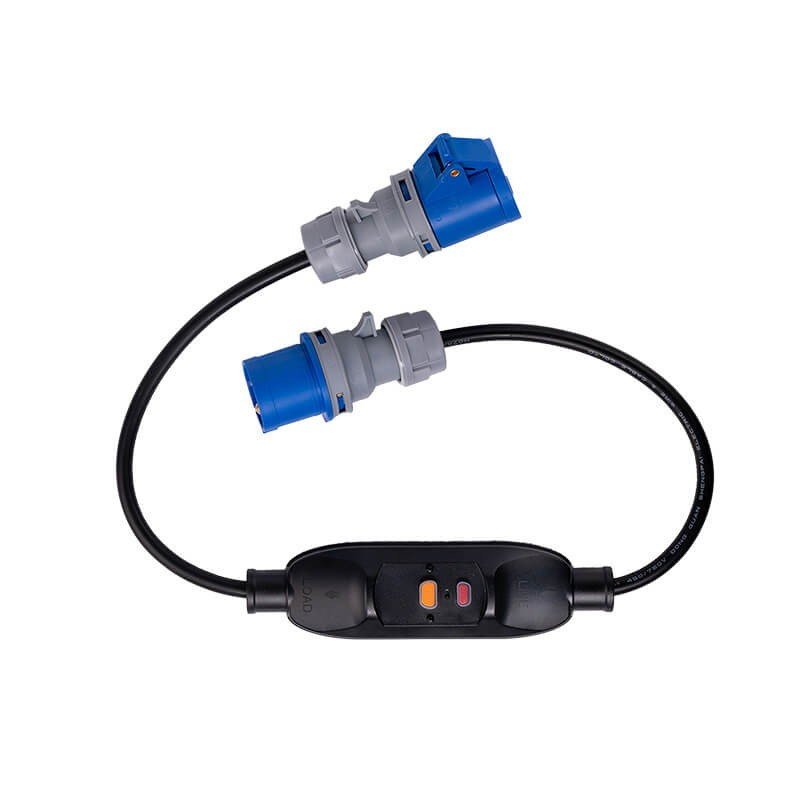
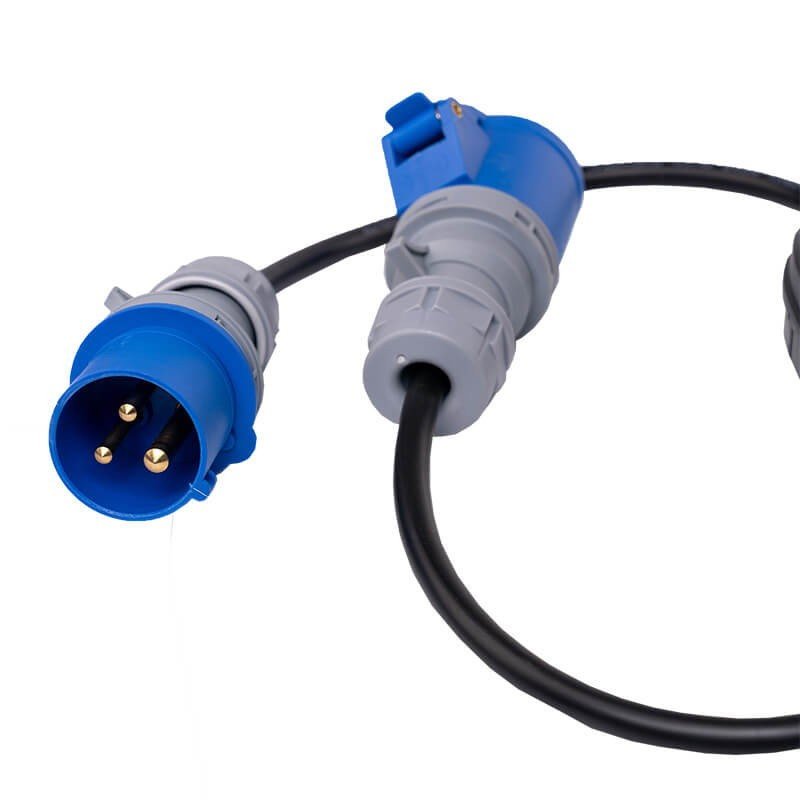
An RCD monitors the current going into and out of a circuit. If it detects a leak, for example through a person or a faulty appliance, it cuts the supply. This model follows the CEE format, the round coloured plugs seen on building sites, campsites, marinas and temporary installations. It slips into the line, between the supply and the tool.
No manufacturer is named and the data received contains only the length of 1 m. We therefore give no rated current, no tripping threshold and no pole count: these must be read on the product itself or in its documentation before buying extension leads or related equipment.
Use cases
For a household
Someone powering a mobile home, a garden workshop or leisure equipment from a generator or an outdoor point can add mobile protection to the existing line, as a complement and not a replacement for the fixed installation.
For a professional
An event organiser, an equipment hirer or a building firm uses it as an extra safety link in a temporary distribution, where leads are moved, coiled and exposed.
Shape and length
Its 1 m length sets it apart from a compact adapter: it lets you keep the module away from the source, put it up high out of puddles or place it within reach of whoever must reset it. Since its detailed construction is not described, rely only on what is marked on the device.
Setting up
- Identify the CEE socket type of your source and your equipment, along with their ratings.
- Check that those of the device suit the planned load.
- Place it clear of water, with no mechanical strain on the cables.
- Once connected, press the device’s test button, if there is one, then reset it.
Any work on a distribution board or fixed circuit must be done by a qualified electrician.
Key takeaways
- A CEE format common at events and on worksites.
- A 1 m length, useful for putting the module in the right place.
- No brand shown: read the markings on the housing carefully.
Technical specifications
- Type: CEE residual current device (RCD)
- Length: 1 m
Safety
A residual current device does not excuse a damaged cable or ignoring permitted power limits. Do not use it if it is cracked or wet, and do not try to repair it. If it trips repeatedly, unplug the appliances one by one to find the source of the fault instead of bypassing the protection. Never plug a long chain of extension leads behind it without checking that the total length and load remain acceptable, and keep connections off the ground wherever the surface might get wet.
Care and storage
Wipe it with a dry cloth and regularly check that the test button works. Keep it clean, away from damp and frost, without coiling the cable too tightly. Inspect the housing and plugs before every use: cracks, bent contacts or traces of heat are reasons to withdraw the unit and have it replaced.